New technologies

The use of thermal power plant wastes in the production of construction materials.

Chief Technologist of the «Siberian Constructing Technologies» LLC, Ph.D., D. Kiselev.

Fly ash (hereinafter - ash) is a fine material, usually consisting of particles ranging in size from fractions of a micron to 0.14 mm.

The ash is formed as a result of burning solid fuel in thermal power stations. It is captured by electrostatic precipitators, and then in the dry state gathered by an ash collector for production needs or together with water and slag is sent to the ash dump.

The structure and composition of the ash depends on a complex of simultaneously acting factors: type and morphological characteristics of burned fuel, fineness in its preparation, ash content of fuel, chemical composition of mineral part of the fuel, temperature in the combustion zone, time of the particles being in this zone, etc. When the mineral part of the fuel has significant content of carbonates under the influence of high temperatures in the combustion process silicates, aluminates and ferrites of calcium (hydratable minerals) are formed.

Such ashes when mixed with water are capable of stiffening and self-curing.

They usually contain calcium oxide and magnesium oxide in a free state.

In accordance with STATE STANDARD 25818-91 all ashes by the type of coal burned are divided into:

- Anthracite ones, formed in the process of burning anthracite, carbonaceous coal and lean coal (A);

- Coal ones, formed in the process of burning coal, except for lean coal (C);

- Brown coal, formed in the process of burning brown coal (B).

Depending on the chemical composition ashes are divided into following types:

acid ones (A) - anthracite, coal and brown coal ashes, containing calcium oxide up to 10%;

Main ones (M) - brown coal, containing calcium oxide more than 10% by weight.

Ashes, depending on their quality indices are divided into 4 types:

I - for reinforced concrete structures and products of heavy and light concretes;

II - for concrete structures and products of the heavy and light concretes and mortars;

III - for products and constructions of porous concrete;

IV - for concrete and ferroconcrete products and structures working in extremely difficult conditions (hydraulic facilities, roads, airfields, etc.).

Quality indices of ashes of various kinds must meet the requirements specified in the table.

Characteristics

Kind of coal burned

Index value by the type of ash

 I

II

III

IV

1. Content of calcium oxide (CaO),% by weight:

for acid ash, max

Any

10

10

10

10

for main ash, .

Brown

10

10

10

10


including:


free calcium oxide (CaO .) max:


for acidic ash


Any


Not standardized

for main ash

Brown

5

5

Not standardized

2

2. Content of magnesium oxide (MgO),% by mass, max

Any

5

5

Not standardized

5

3. Content of sulphureous and sulfuric compounds in terms of SO 3,% by weight, max:

for acidic ash

Any

3

5

3

3

for main ash

Brown

5

5

6

3

4. Content of alkali oxides in terms of Na 2 O,% by weight, max:

for acidic ash

Any

3

3

3

3

for the main ash

Brown

1.5

1.5

3.5

1.5

5. Mass loss at ignition (p.p.p.),% by weight, max:

for acidic ash


Anthracite

20

25

10

10

Coal

10

15

7

5

Brown

3

5

5

2 2

for the main ash

Brown

3

5

3

3

6. Specific surface, m 2 / kg, min:

for acidic ash

Any

250

150

250

300

for the main ash

Brown

250

200

150

300

7. Residue on sieve number 008,% by weight, not more:

for acidic ash

Any

20

30

20

15

for the main ash

 Brown

20

20

30

15

Notes:

1. Free calcium oxide CaO and magnesium oxide MgO content in the main ashes above the level specified in the table is allowed if the soundness of samples when they are tested in an autoclave is proved or the use of these ashes is justified by special studies on concrete durability considering specific operating conditions.

2. Sulfur and sulphate compounds content in the ashes and mass loss at ignition above the indices shown in the table is allowed if the application of these ashes is justified by special studies on the durability of concrete and corrosion resistance of the armature.

3. A larger residue on sieve number 008 and a lower specific surface area than indicated in the table is allowed for the ashes of I-III type, if the application of these ashes guarantees target quality of the produced concrete.

4. The ashes mixed with Portland cement must ensure the soundness when the samples are tested by boiling in water, and basic ashes of type III - in an autoclave.

5. Ash moisture should be no more than 1% by weight.

6. Specific activity of natural radionuclides in the ash used for construction of residential and public buildings must meet the requirements of Section 1.4. of the Basic sanitary rules of the Ministry of Health.  

When the ash doesn’t meet the requirements of the Basic sanitary rules - 72/87 the possibility of its application for preparation of concretes and mortars used in residential and public buildings is determined by the results of radiation-hygienic evaluation of ash containing concretes and mortars in accordance with Section 1.4. of the Basic sanitary rules - 72/87.

By the content of CaO. all the ashes are divided into  high calcium - CaO more than 10% and low calcium - CaO less than 10%.

By ash activity they are classified as active, latent and inert.

1. Active

Mo = 0,5-2 CaO gen. - 20-60%

CaO FREE. Up to 30% KR = 1-3,6

2. Latent

Mo = CaO 0,1-0,5 gen. - 5-20%

CaO FREE. Up 0-2% KR = 0,5-1,5

3. Inert

Mo - less than 0.1 CaO gen. - 0,5-5%

CaO FREE. Up 0-1% KR = 0,4-0,9.

The first group consists of ashes with their own astringent properties, and the second and third group consists of mainly acidic ashes, not having their own astringent properties and requiring hardening activators.

High calcium ashes

Those are the Baltic shale ashes, Volga shale ashes and Kansk-Achinsk brown coal ashes.

The most common in Russia, especially in Siberia, are ash Kansk-Achinsk brown coal ashes, as resources of these coals make 40% of the All-Russian.

These coals are used at the Heat Power Plant # 3 of the city of Novosibirsk, at all three Heat Power Plants of the city of Krasnoyarsk and also at Heat Power Plants of the city of Barnaul, Achinsk, Omsk, and others. The total amount of these ashes accumulated in the dump makes 24 million tons, and only the Heat Power Plant # 3 of the city of Novosibirsk daily dumps 200 tons of these ashes.

The advantage of these ashes is that they have their own astringent properties due to the presence of clinker minerals CaO free., and gypsum in them, so these ashes can be used as a replacement for a part of cement in foam concrete [1].

High calcium ashes of solid fuels are multiphase materials with astringent properties.

The quantitative content of separate minerals in them is different.

Cementing properties depend on the composition and the ratio of the phases, and the components of the ash.

The optimum ratio of these phases allows to obtain maximum hydraulic activity and improve the physical and chemical properties of the material.

It is possible to find optimal compositions of binders only if the hydraulic activity of phases and the mechanism of interaction between them are very well studied.

The phases composing high calcium ashes can be grouped by type of hardening or by properties into the following groups:

- Clinker materials (silicates, aluminates, alumoferrites, and ferrites of calcium).

- Air binders (free calcium oxide, free magnesium oxide, semi-aquatic and anhydrous calcium sulfate).

- Glassy phase (acidic, basic glass, malilits)

- Insoluble residue.

Due to the heterogeneity of the grains in the fuel mixture and the possibility of contact of the dust paticles, burning in suspension in the flow, all the chemical processes take place in the volume of individual particles.

This leads to the fact that the clinker and iron-containing minerals and the main amount of CaO (svob.) are concentrated in the heavy fraction of the ash (specific weight> 2.88), the medium fraction (1,83-2,88) mainly contains quartz, silica-alumina glass and CaO (free.), and in the light fraction (<1.83) hollow balls of silica glass are concentrated.

There is a relationship between the chemical properties of the phases and the hydraulic activity of high calcium ashes.

All phases composing the ashes, depending on the capacity for hydration and hardening can be attributed to two types:

  1. Phases capable of hydration:  those are clinker minerals and air binders.
  2. Phases capable of hydration and formation of an artificial stone only in the presence of hardening activators: those are the glassy phase and the insoluble residue.

The glassy phase is being hydrated and hardens only in the presence of free calcium oxide and calcium sulfate, insoluble residue - as a result of interaction with the free calcium oxide.

Acidic ashes  

Acidic ashes also have unstable chemical composition and contain a large amount of silica and small amount of calcium oxide, compared to the Kansk-Achinsk brown coal ashes. They do not have their own astringent properties, but in the interaction with cement and lime they begin to show them.

The most stable on chemical composition is the ash of the Heat Power Plant #5 of the city of Novosibirsk.

Application of acid ashes as a silica component in cellular concretes often allows to eliminate the complex process of autoclaving and replace it with steaming.


Phase composition and hydraulic activity of ashes.

Free calcium oxide.

In the process of burning the calcium oxide, formed as a result of thermal decomposition of primary calcium containing compounds, is exposed to high temperatures.

In the dust and gas flow calcium oxide partially interacts with the oxides and gases, giving secondary calcium containing composites.

A part of it remains in the free state, but its low active and high temperature form is produced.

In addition, the surface of free calcium oxide particles is often covered with melted shell, which makes it difficult to contact with water.

The process of hydration of a calcium oxide goes slowly.

Calcium hydroxide is formed in the artificial stone at such times, when a stable crystallization structure is already formed.

There are significant internal tensions causing irregularity of volume changes of the hardening system, deformation and even destruction of the artificial stone.

In the process of Beriozovskaya ash hydration after a day of hardening the samples have considerable strength, and by the 7th day of hardening the samples start having cracks and the strength drops sharply.

By the 28th day there are further but already small deformations of the samples, but mechanical strength remains unchanged.

The cracks on the samples contribute to the contact of hydration products, including Ca (OH) 2, with the air.

zola_tabl

1- Nazarovskaya ash, 6% CaO free.

2- Irsha-Borodinskaya ash, 5.3% CaO free.

3-Berezovskaja ash, 14% CaO free.

Calcium oxide hydrate reacts with carbon dioxide of the air and forms a dispersed secondary calcium carbonate.

There happens a destruction of Ca (OH) 2 crystals.

This process also causes a decrease in mechanical strength and weather resistance.

At hardening of Nazarovskaya and Isha Borodinskaya ashes so pronounced structural changes occur less frequently.

Usually by the 7th day of hardening a little decrease in strength is observed, and then the process of hardening of the artificial stone goes on.

The negative effects of slowly hydrating free calcium oxide in the ash can be reduced by the following technological methods:

- By pre-hydration;

- By grinding the ashe

- by application of additives accelerating the process of CaO hydration or reacting with it;

– by hydrothermal treatment of the ash binders. [2,3,4,5]

For lignite ashes preliminary hydration is less effective as the combustion temperature of brown coal is higher than the one of shale.

The glassy shell is formed on the majority of CaO (free.) grains. It is more solid, and water practically can not come into contact with CaO.

There is an optimum amount of CaO free. in the ashes - 4,5-10%.

It should be noted that the high content of CaO FREE. in the ashes is more desirable than the low one, because the calcium oxide is being hydrated itself, activates the process of the glass phase hydration and reacts with the acidic part of the glass phase and the insoluble residue.

Structural deformation can be eliminated by using additives.

Free magnesium oxide.

The content of MgO (total) in high calcium ash ranges from 0 to 8-10%.

In the free state the content of MgO reaches 2-4%.

MgO (free.) in the ashes can be both in the active form, which easily interacts with water, and in the form of periclase, which interacts with the water very slowly.

The presence of periclase in the ash worsens its quality as a binder, as its late and slow hydration causes internal tension in the hardened ash stone and can lead to cracking and distortion of the geometric shapes of the products.

Calcium sulfate.

Its content in high calcium ashes ranges from 1-2 to 18-20%.

In the process of hydration first gypsum is formed, which then binds into ettringite, and only after the binding of the whole plaster there begins the process of  crystallization of calcium gydroaluminates and solid solutions, which have the structure of high symmetry [6].

The negative effects of free calcium oxide excess at hardening of the ash binders quickly reveals the excess of anhydrite at the beginning of hardening may have a positive impact on the hydraulic activity.

In the initial period of hardening the binder containing anhydride in plenty can have greater strength than the binder containing the optimal amount.

In the later periods of hardening surplus anhydrite causes the decrease of strength.

The changing the sign of the correlation coefficient between the hydraulic activity and the content of SaSO 4 in the sample is connected to the change of composition of the new formation containing anhydrite [195].

Glassy phase.

The glassy phase, in which the content of high calcium ashes ranges from 15 to 60%, consists mainly of glass, alumoferrites and calcium ferrites.

The composition of glass is not constant, as evidenced by the varied color of glass and the refractive indices.

The content of oxides, mainly forming the glass phase varies in the following percentages:

SiO 2 - 21-28;

AL 2 O 3 - 10-20;

Fe 2 O 3 - 8-12.

Observations of the process of glass phase hydration [7, 8] showed the following.

The droplets of glass of brown and dark color have the most intensive interaction with water.

First around the drops of shale ash glass new crystalline formations, similar in composition to 3SaO * Al 2 O 3 * 3SaSO 4 * 31N 2 O, are formed.

Later there appear crystals of high base calcium hydroaluminates.

In the ashes of brown coals the drops of dark-colored glass show the highest hydraulic activity.

Unpainted glasses and the glasses of light colors do not have independent astringent properties and practically do not interact with water.

Calcium oxide, alkali, calcium sulfate have activating effect on the glass.

The more AL 2 O 3 and the less CaO the glass phase contains, the more anhydrite is bound and the higher is the hydraulic activity of the ashes.

For the hydraulic activity of silica glass the presence of CaO is required.

Insoluble residue.

The content of insoluble parts in the industrial high calcium ashes varies widely from 5 to 50%.

According to chemical analysis, the insoluble part of various ashes differ mainly by SiO 2 and K 2 O content.

Typically, the most of SiO 2 and less K 2 O is contained in fly ash fractions.

Insoluble residue is the more bound with CaO, the more SiO 2 it contains.

Based on experimental data [9] we may assume that the insoluble part of high calcium ashes is not an inert component, and by its hydraulic activity occupies an intermediate position between sedimentary and volcanic hydraulic additives.

Building mortars made of insoluble part of the ash with lime and Volsk sand (1:1) have by the 28th day the compressive strength of 100-200 kg / cm 2.

The amount of lime required for hardening of insoluble residue products and for their getting sufficient weather resistance is 15-25% of their weight.

Application of ashes


The «Siberian Constructing Technologies» LLC is a developer of advanced production technology and quality building materials using large-tonnage industrial wastes such as fly ash of thermal power plants and metallurgical slags as raw material.

Our developments allow the use of flue ash in the manufacture of the following construction materials:


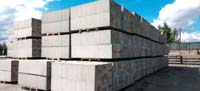
1. Cellular concretes (foam concrete).

We have completed the research work allowing the use of flue ashe in the foam concrete technology.

Adding fly ash into the foam concrete mixture can improve the aggregate stability of the mixture in the period from the beginning to the end of stiffening of the cement slurry, thereby prevent the movement of components in space caused by gravitational forces, and thus adversely affect the formation of the structure.

Another positive aspect is its fine-dispersed composition that is conducive to the creation of dense packing of particles in interpore partition of the foam concrete. If the tight condition in the interpore partition is not achieved, then the formed primary hydration products will be mainly in the gel state, which while drying will develop shrink effect both in interpore partition and all over the body of the foam concrete product.

The formed partition under such conditions will have little strength, which, in turn, will lead to a sharp decrease of the strength characteristics of foamed concrete.

The developed technology with the use of a complex of modifiers and equipment allows producing small-size products of non-autoclaved foam concrete meeting the state standards with a substantial saving of cement (more then 30%).

This technology is widely implemented in the enterprises of Novosibirsk and the Novosibirsk region.


2. The use of flue ash of thermoelectric power stations for improvement of heavy concrete properties.

The fly ash of thermal power plants can be used in the manufacture of a monolithic and precast concrete and reinforced concrete structures.

The use of fly ash allows us to manage the processes of structure formation, to regulate flowability and viability of the concrete mix (the time until the mixture loses its mobility), the speed of hardening and strength at a given age.

The efficiency of fly ash to the same extent depends on the characteristics of source materials (fly ash and cement) as well as the right approach to choosing the directions of its use.

Our technologies allow the use of fly ash in concretes in three directions:

- Ash as an additive instead of a part of cement;

- Ash instead of a part of sand;

-Ash as a separate component (active filling agent).

3. The use of fly ashes of thermoelectric power stations in production of light concretes (ceramsite concrete).

The most important requirement for the manufacturing technology of ceramsite concrete products is a dense structure (without intergranular voids) To satisfy this condition the ceramsite concrete mixture should contain about 40% of fraction finer than 1.2 mm, and in the sand fraction - up to 40-50% by weight of particles smaller than 0,15 mm.

This causes considerable production difficulties, because now operating clayite plants produce almost no amount of haydite sand.

The deficit of keramzite sand and its low quality of leads to the fact that many factories apply the usual heavy sand as fine aggregate in the structural and heat insulating ceramsite concrete.

In this case the ceramsite concrete loses many of its advantages: the density is increased up to 1400-1600 kg / m 3, and the thermal resistance drops sharply.

One of the effective aggregates in lightweight concrete is a thermal power plant ash, which can partially or completely replace other types of fine aggregates.

4. Low-cement concretes for roadbase preparation.

An effective direction is using thermal power plant ash in slag and silicate concretes for the repair of airfields, roads, bridges, as well as for making alkali-acid floors in cattle-breeding complexes and workshops for chemical, metallurgical and other industries working with aggressive media.

Floors can be produced by grouting or made of slag and silicate concrete tiles.

5. Production of ash binding material.

Ash binding material can be widely used for the manufacture of building structures of moist air and hydrothermal hardening.

This material can replace cement in the manufacture of ready-mix concretes, mortars and finished products produced by industrial complexes.

It’s especially useful to create such plants in immediate proximity of thermal power plants.

The thermal power plant flue ash can also be used as an additive to cement, which not decrease the activity of the material, for the preparation of special concretes, manufacturing of lightweight aggregates for concretes (porous material, like claydite, agloporite, etc.), for road construction (filler of hydrocarbon binders, preparation for coating, etc.), as an additives to the clay in the manufacture of bricks, tiles, etc.

It should be noted that for making a decision on the effectiveness of using the fly ash of any thermal power plant it is necessary to carry out a complex technological and physical and mechanical tests.

The nature and the degree of a fly ash influence on the properties of fly ash compositions to a large extent depend on the ash quality characteristics.